
Lesson 2.6 · Tier 2 — First Build
Choosing your AI specialization is the last move of this tier, and it’s the one people freeze on — not because the choice is hard, but because they’ve misread what kind of choice it is. It feels like picking an identity: am I a software person forever? It isn’t. And the proof that it isn’t comes from the most awkward receipt on this site: the moment this brand — whose entire stated ambition is to cover all three tracks — still chose to build out only one track first — the other two doors exist, and open onto rooms that are deliberately still empty. You’ll see the screenshot below.
You’ve earned this decision the honest way: three mini-builds, one in each territory. A web page that’s live, a media piece that’s delivered, a product a stranger can use. Most people choose their direction from vibes and YouTube thumbnails. You get to choose from evidence you generated yourself.
AI specialization is a beachhead, not a marriage
Reframe the choice first, because the fear lives in the framing. You are not choosing what you’ll be forever — you’re choosing where to go deep first. Depth compounds: the second track you learn will go twice as fast because building skills transfer (you felt this — the finishing discipline from Mini-Build B showed up uninvited in Mini-Build C). So the cost of “choosing wrong” is months, not a life. The cost of not choosing — staying shallow in all three — is permanent, because shallow doesn’t compound at all. You already know this pattern from Lesson 2.0: track-hopping is tool-hopping at a larger scale, and it kills builders the same way.
Now read your own evidence. Go back to your three builds and your build log, and score three signals — none of which is “which one pays best”:
The overtime signal. Which build did you keep touching after it was done — one more tweak, one more variant, at midnight, unpaid? Energy that survives “finished” is the rarest resource you have.
The wall signal. Which build’s wall annoyed you the least? This is the honest one, because a track is mostly walls — you learned that in Lesson 2.2. Choose the frustration you can live with, not the highlight reel you liked.
The show-off signal. Which one did you send to someone first, before anyone asked? Pride points at fit more accurately than any career-quiz question.
Ignore the signals that rot: what’s trending this month, what a stranger on the internet earns, what sounds impressive at dinner. Those are other people’s evidence. You just spent a tier generating your own — trust it. Two signals pointing the same way is a decision; three is a luxury. And if all three point nowhere? Then the tie-breaker is the wall signal alone, because tolerance outlasts excitement in every build ever made.
One more thing specialization does not mean, because this misunderstanding scares people out of choosing: you don’t lose the other two skills. Every real project uses all three at different ratios — a software builder still makes media (screenshots, demo videos, a landing page) and still packages products; a business builder still ships pages and visuals. This site is the proof: a “content” project that needed a web build, a full visual identity, and productized systems to exist at all. Specialization sets the ratio, not the boundary. You’re choosing which skill goes deep while the other two stay warm — which is exactly why the mini-builds made you touch all three first.
From the build log: the umbrella brand that still picked one door
Here’s the receipt, and it required publishing something mildly embarrassing. Back in Lesson 1.4 you watched this site’s author declare his ambition: all three tracks, a brand so complete that “AI” alone summons it — and you watched the AI push back with his own Bruce Banner metaphor. What those lessons didn’t show is how the debate ended in architecture. Click the three track doors on this site today and compare what’s behind them: the Software Builder page opens onto a full track. The Media Creator and Business Builder pages open onto a title and almost nothing else — not neglect, a decision. All the curriculum-building hours went into one door first, and the other two were left honestly, visibly empty rather than stuffed with thin filler:
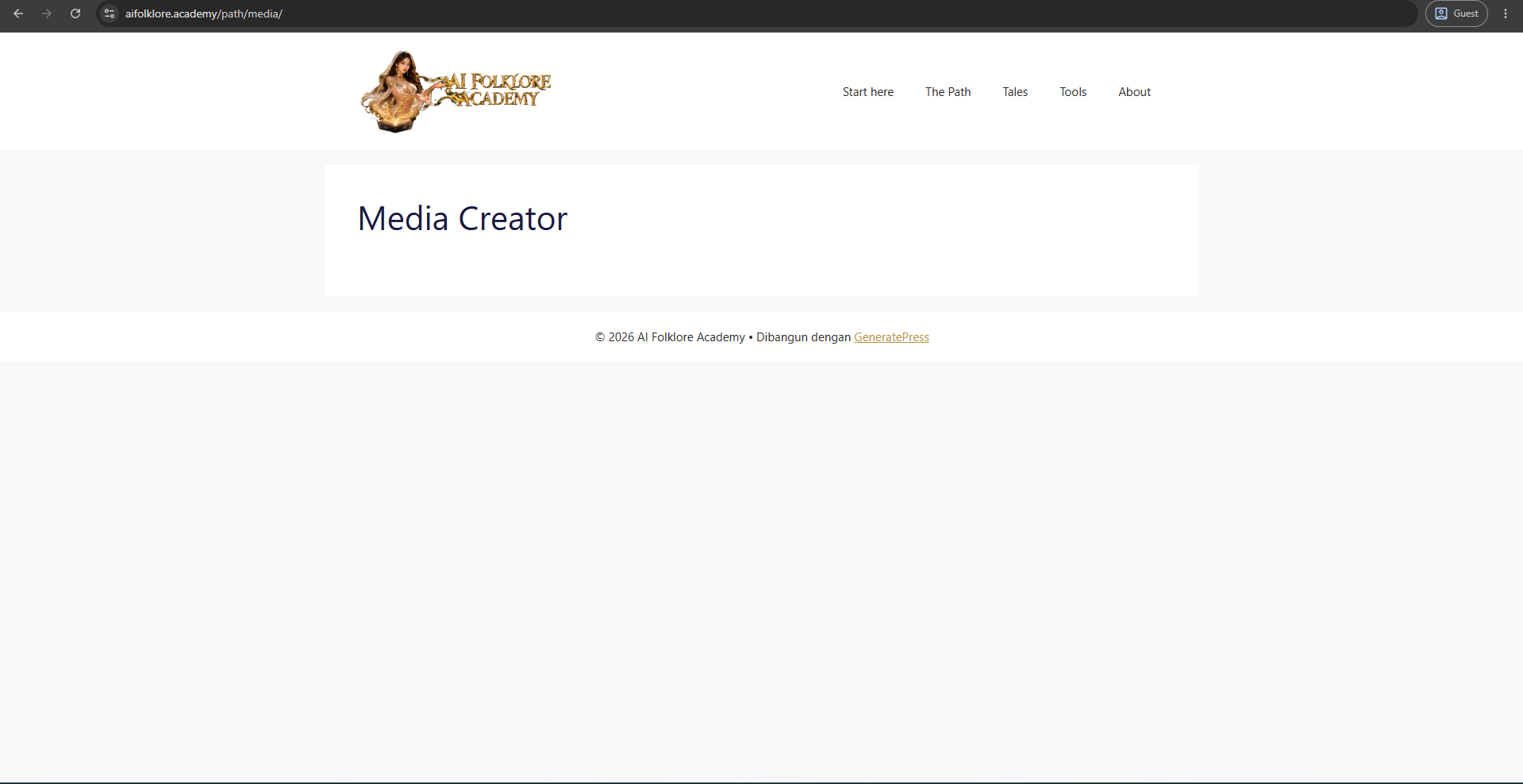
From the build log: the specialization decision, visible as content. One door opens onto a full track; this one opens onto an almost-empty room — kept empty on purpose instead of filled with thin filler. The brand whose whole ambition is “all three” still sent every building hour through one door first, because a deep track beats three shallow ones.
Understand why this receipt matters to your decision. The ambition never shrank — Media and Business are coming; the pages literally exist. What the author refused was filling all three thin, because thin is the one sin this site already paid for once (you read that story in Lesson 2.5). Specialization isn’t abandoning the other doors — it’s sequencing them behind depth. If a brand with “all of it” written into its origin story can commit to one beachhead, so can you. Pick your door, give it one honest season, and let the other doors wait exactly the way those rooms are waiting: built, open, and honestly empty until they deserve real content.
Write the decision note in your build log, four lines: the track you choose · the two-or-three signals that pointed there (with the evidence) · the commitment window (one season — through your next tier of learning) · the checkpoint date when you’re allowed to re-decide. Switching is legal at the checkpoint; switching mid-wall is not. That note plus your three artifacts = Tier 2 complete. You’re not someone learning AI anymore — you’re a builder with a direction.
Tier 2 complete. If your door is Software — it’s open now. (Media and Business are being filled next; you saw the empty rooms yourself.)Enter the Software Builder track →