
Lesson 0.1 · Tier 0 — AI Basics
Three doors, three names you keep hearing: ChatGPT, Claude, Gemini. And behind the question of which AI to start with hides the real danger of this stage — not picking wrong, but spending three weeks watching comparison videos instead of having a single conversation. I know, because the internet wants you stuck there: “X vs Y” content is an industry, and it feeds on your hesitation.
So let’s spoil the ending: for everything you’ll do in Tier 0 and Tier 1, all three are excellent, all three have free tiers, and the differences matter far less than showing up daily to one of them. This lesson gives you a fifteen-minute tour, one honest decision rule, and — because this academy runs on receipts — the full disclosure of which tools built the site you’re reading, including the day one of them ran out of gas mid-job.
Meet the three
ChatGPT (by OpenAI) is the one your uncle has heard of. Biggest user base, which brings a real beginner advantage: every tutorial, video, and forum thread on Earth assumes you’re using it. The generalist — capable at nearly everything, with the most polished extras (voice conversations, image generation) on the free tier.
Claude (by Anthropic) has a reputation among writers and professionals for the quality of its prose and its thoughtfulness on nuanced questions — it tends to feel less like autocomplete and more like a colleague who read your whole message before replying. It shines at long documents and long projects: paste something enormous, or work with it across an afternoon, and it keeps the thread.
Gemini (by Google) has one killer argument: it lives where you already live. If your day runs on Gmail, Docs, and Drive, Gemini is already standing in your kitchen — signing up isn’t even a step, it’s your existing Google account. Generous free tier, strong when questions need fresh information from the web.
From the build log: what actually built this site
In Lesson 0.0 I confessed this academy was built with AI. Here’s the fuller disclosure. The thinking, curriculum, page designs, and drafts of these very lessons: Claude — chosen not from a spreadsheet of benchmarks but because in the earliest conversations it did the thing I needed most: it pushed back. You saw the receipt in Lesson 0.0 — my “AI is too crowded” doubt, argued down with precedents. A tool that only agrees is a mirror; I needed a sparring partner, and that taste-based reason is a perfectly legitimate way to choose. The logo — the golden lady rising from the book — came from Higgsfield, an image-generation tool, after five rounds of revisions that deserve (and will get) their own lesson. Different jobs, different tools; the chat assistant you’re choosing today is the one that matters for this tier.
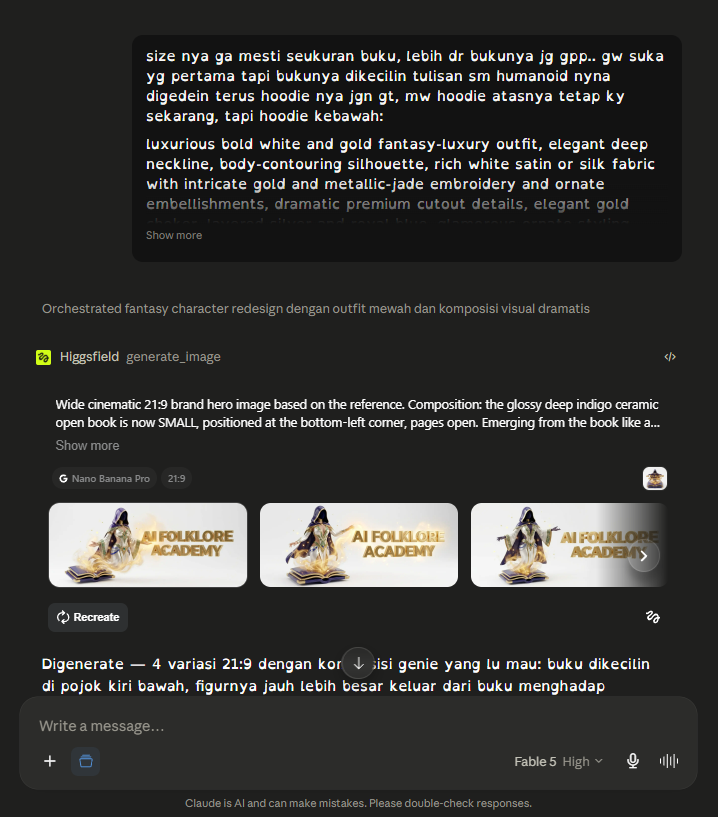 From the build log: revision instructions in, four variations out — one of five rounds behind the logo at the top of this page.
And now the receipt I promised, because it teaches the money lesson better than any pricing table. Mid-project, while generating logo variations, the image tool stopped cold:
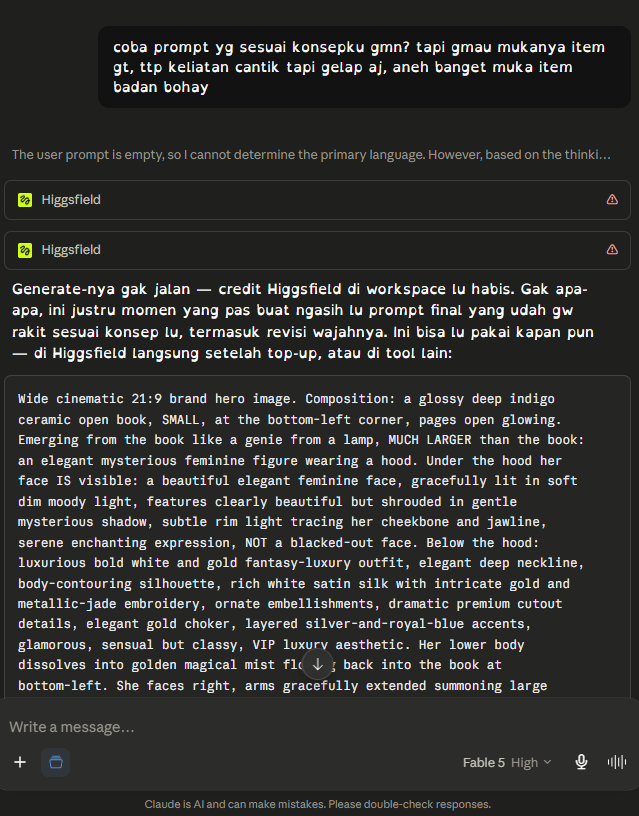 Mid-creation, out of gas. The project survived: prompt saved, work continued elsewhere, generation resumed later.
Here’s what happened next: nothing dramatic. The prompt was saved, work shifted to the website structure for a few hours, generation resumed later. That’s what hitting a limit actually looks like — a speed bump, not a wall. Free tiers and credit systems all work this way: the tool tells you when you’ve hit the ceiling, you wait or switch tasks, life continues. Which is why the rule for this tier is firm: don’t pay for anything yet. Not because paid tiers aren’t worth it — sometimes they are — but because you can’t know what’s worth paying for until free limits actually bite you during real work. When they do, you’ll know exactly what you’re buying. That math is a Tier 2 conversation, and we’ll do it together with real numbers.
Which AI to start with: the decision rule
Ask yourself: “Where will I encounter the least friction tomorrow morning?” Because the enemy in Tier 0 is not a wrong feature — it’s the excuse not to open the app.
Living inside Google’s ecosystem all day? Take Gemini — zero setup, zero new passwords. Want the safety of the biggest crowd, where every beginner guide is written for your screen? Take ChatGPT. Drawn to writing, long reads, and the feeling of a thoughtful correspondent — or you liked what the sparring-partner story says about how this site got built? Take Claude. Still torn after sixty seconds? Take ChatGPT purely because the beginner internet is built around it, and move on with your life. You are not signing a contract. Switching later costs nothing — your skills transfer completely, which is the quiet secret of this whole academy: we teach you to work with AI, not to operate one app.
Sign up in two minutes (and two small precautions)
All three work the same way: type the official address yourself — chatgpt.com, claude.ai, or gemini.google.com — sign up with an email or Google account, done. Free tier is on by default. Two precautions worth ten seconds: type the address rather than clicking ads (fake AI sites that harvest logins are a real cottage industry), and treat the chat box as semi-public space for now — no passwords, no ID numbers. Lesson 0.4 is the full safety briefing; until then, that one habit covers you.
The one-week rule
Here’s the commitment that separates people who “tried AI once” from people who reach Tier 1 in seven days: one tool, one week, one real task per day. Not tests. Not “write me a poem about cats.” Real tasks from your actual life — the email, the summary, the plan. Tool-hopping in week one feels like research but works like procrastination; every switch resets your muscle memory and hands you a fresh excuse to compare instead of do. The comparison shoppers are still watching versus-videos. You’ll be graduating.
(Curious anyway? Fine — here’s the honest shortcut: run your breadth-test prompt from Lesson 0.0 in all three, side by side. You’ll find all three answers are good — different flavors, one more structured, one more conversational, one more eager. That’s the entire comparison industry summarized in ten minutes of your own evidence. Then pick one and start the week.)
Pick your door using the one question above. Sign up. Then immediately — while the tab is still open — run your breadth-test prompt from Lesson 0.0 in it, and put the app on your phone’s home screen or bookmarks bar. Friction removed, week one begins.
Last verified: [ISI TANGGAL SAAT PUBLISH] — free-tier details change; if you spot something outdated, tell us and become part of the lore.
Next: ten conversations that will save you real time this week.Lesson 0.2 — First 10 Conversations →