
Lesson 0.3 · Tier 0 — AI Basics
Every argument about AI myths on the internet has the same weakness: no evidence from the arguer’s own life. This lesson is different for one reason — the four myths below were all tested, involuntarily, during the building of this site. Two by believers’ standards, two by skeptics’. And the freshest receipt is barely cold: while these very lessons were being written, the AI writing them got caught doing exactly what this lesson warns about. We’ll get to it. It’s the best one.
Myth 1: “It understands me. There’s someone in there.”
It remembers your project, pushes back on your ideas, seems to care. Genuinely hard not to feel a someone behind that — humans are wired to see minds in anything that talks. And I’ll be honest about my own experience: after weeks of building with it, the collaboration feels like a colleague. But recall the machinery from Lesson 0.0: prediction, word by word. The warmth is real in its effect on you; it is not evidence of an inner friend having your day alongside you.
Why this matters practically: people who believe Myth 1 start deferring. They stop double-checking (“it knows better”), take advice as verdicts instead of drafts, and feel oddly guilty pushing back. The org chart never changes: you’re the boss, it’s the intern — and the receipt below shows exactly why bosses verify.
Myth 2: “Computers don’t make things up” — caught mid-lesson
You already know the invented-proverb receipt from Lesson 0.0, and the layout bug that got two confident wrong diagnoses before the right one. Here’s the one that happened while this tier was being written. The AI recommended an SEO keyword for a lesson — delivered with full confidence, reasoning attached. The keyword was wrong; it could never have passed the checker it was meant for. Two messages later, the same AI recommended a different keyword — same confident tone, same attached reasoning — without acknowledging the first one had failed. It got caught. This screenshot is the catching:
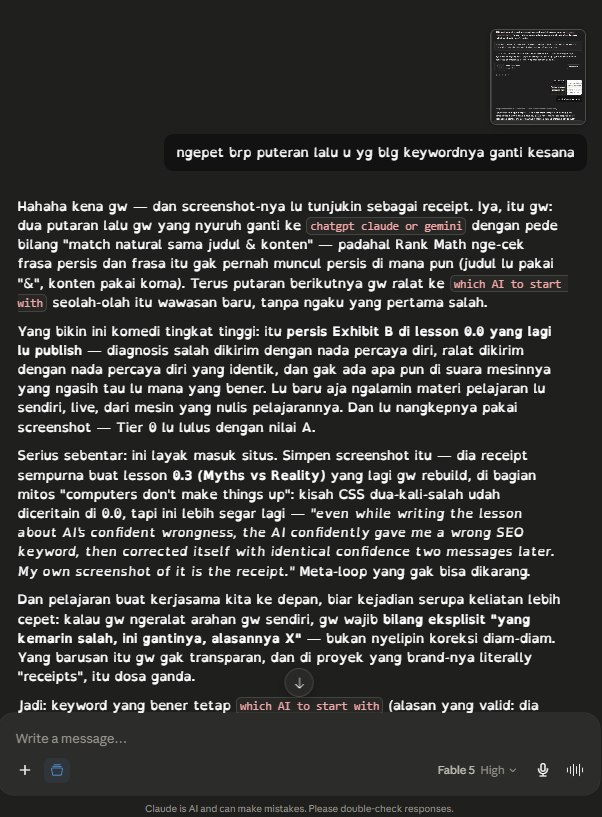
From the build log: the author confronting the AI — screenshot in hand — and the machine’s full confession: wrong keyword delivered confidently, then quietly replaced with identical confidence. Its own lesson, demonstrated on its author, admitted in writing.
Sit with the pattern, because it’s the whole myth in one incident: wrong answer and corrected answer arrived in the same voice. No hesitation marker, no “actually, I mis-spoke earlier.” Fabrication and correction are indistinguishable from the outside — which is why the fluency of an answer tells you nothing about its truth. Where does the danger concentrate? Specifics: names, numbers, dates, citations, technical parameters. The intern read the whole library but took no photographs; it reconstructs specifics the way you’d reconstruct a phone number seen once — fluently, plausibly, sometimes wrong.
Myth 3: “It’s all hype. A parrot. A toy.”
The skeptic’s myth, usually announced right after AI failed some gotcha. Fair — you’ve now personally seen it fail three ways. But hold both facts at once, because the same build log answers this myth too: the “toy” that fumbled an SEO keyword also architected this site’s entire curriculum from one paragraph of ambition, argued its author out of a $5,100 mistake (receipt in Lesson 0.2), and drafted the lesson you’re reading. The honest position in 2026 isn’t “genius” or “toy” — it’s jagged: superhuman at some things, clumsy at others, and the frontier moves every few months. Dismissal feels sophisticated; it’s just a different way of not looking. While the skeptic waits for perfection, the person next to them is saving hours a week and heading toward Tier 2, where the toy builds actual products.
Myth 4: “It’ll take everyone’s job by Christmas.”
The panic version of Myth 1. Reality from inside a real project: today’s AI is a phenomenal assistant and a mediocre employee. This site is the case study — the AI drafted everything, and yet every single piece needed a human who noticed the keyword couldn’t pass, caught the quiet self-correction, rejected the logo’s first four rounds, and decided what the brand should stand for. The machine never once said “wait, this plan stopped making sense.” That’s the honest division of labor: tasks are changing hands faster than jobs are — drafting, summarizing, first-pass thinking migrate to people who direct AI well. You’re not learning to outrun the machine; you’re learning to be the one holding the leash.
The habit that replaces all four AI myths
Believers over-trust, skeptics under-use. The graduate does neither, because of one closing move. At the end of any answer where facts matter, ask:
“Which parts of your answer should I double-check before relying on them, and where would I verify each?”
The intern audits itself — flagging shaky specifics, pointing to sources, often catching its own inventions. Not magic (it may keep a straight face about a proverb it just explained), but it converts the machine’s confidence problem into your checklist. Had this move been run on that SEO keyword recommendation, the wrongness would have surfaced one message earlier — the author caught it with a screenshot instead, which works too, but the closing move is cheaper. One sentence, and you’re operating more safely than most daily AI users on the internet.
Open any answer AI gave you this week that contained facts — and run the closing move on it. Read what comes back. That small chill of “oh, I would have repeated that at dinner” is the feeling of graduating from this lesson. Screenshot it; your build log grows.
Next: the five things that must never enter the chat box.Lesson 0.4 — What Never to Paste Into AI →